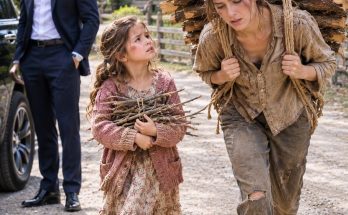
ed over the table. “Shelby was always too smart for her own good. She thought she could take me on with a few papers, and now she picks up sticks for a living. Want to end up like that?”
I held his stare. “I’d rather lose every dollar I have than become someone like you.”
He stopped smiling. “Then you’re about to learn what it costs to cross the Hargroves.”
The threat came true two nights later. Someone smashed a window on my car. That same night, Shelby heard noises near her woodshed. She didn’t go out, because Willa was asleep and she was afraid.
At dawn she found the padlock cut. Most of the firewood she had stacked for winter had been thrown into the creek. Tools were gone. One window of the cabin was broken.
When I arrived that morning, I found her sitting on the ground, crying without a sound. Willa stood beside her, staring at the soaked logs.
“Mama, are we going to be cold now?”
Shelby pulled her close. “No, baby. We’ll find a way.”
Then she looked up at me. “This is what they always do,” she said. “They don’t have to hit you. They take your job, they take your friends, they scare you, until you stop talking.”
I knelt next to her. “We’re going to report this.”
“And then what? You’ll go back to Atlanta while we stay here?”
I didn’t argue or make promises. I took out my phone, called Gwen, and asked for help filing a report. Then I started pulling logs out of the creek.
I felt her watching me. I was wearing a coat that probably cost more than everything she owned. Yet there I was, on my knees in the mud, hauling wet wood with my bare hands.